Hyper Realism


In this digital age, capturing a moment in vivid details is no longer that impossible. But because we are humans and we can still appreciate beauty, we still admire a beautifully taken photograph. But wait until you see what these hyperrealistic painters can do. Not only can they copy every detail of a photograph skillfully, they can also trick your eye into believing that what you’re seeing is real. Look and be amazed:

1. Roberto Bernardi
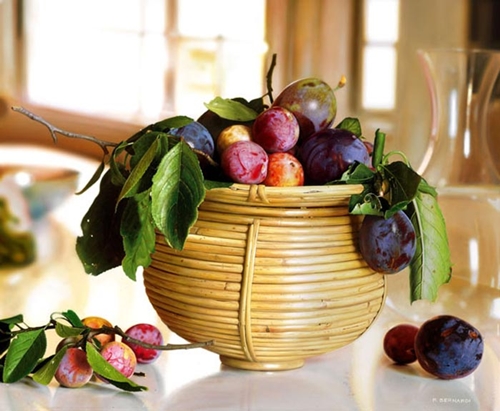
Look at that painting! If I came across that during a random Google image search, I would never think that it is an oil painting on canvas. From the depth of field to how the light hits the basket, this screams “digital photo” to my brain. Alas, my brain is fooled. But I guess that’s okay since Roberto Bernardi is skilled enough and is the right painter to mess with my brain. He studied Renaissance painting while still a student and actually worked in Rome as a restorer in the early ’90s.

2. Denis Peterson

This looks like photo from a National Geographic magazine, does it? But you know it’s not. This is called Don’t Shed No Tears. This acrylic on canvas is just one of the many hyperrealistic paintings that Denis has done. He is so good that his works have been displayed in many high-end museums. His more recent works show New York urbanscapes with giant billboards. You would think that the billboards are the paintings but the buildings, buses, and people are part of the whole canvas, too.

3. Jason de Graaf
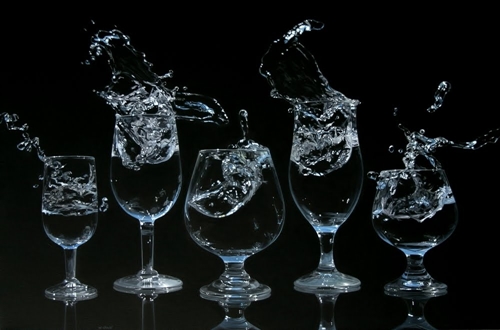
The thing that you will notice right away with Jason’s paintings is the way he captures water. From the movement to the beauty of a single drop, your mind would refuse to accept that you’re seeing a painting. Assuming that this is a photograph, you’d admire the person who took it because of his or her perfect timing and fast shutter speed. But when you realize it’s a painting, your mind is officially blown.

4. Gregory Thielker
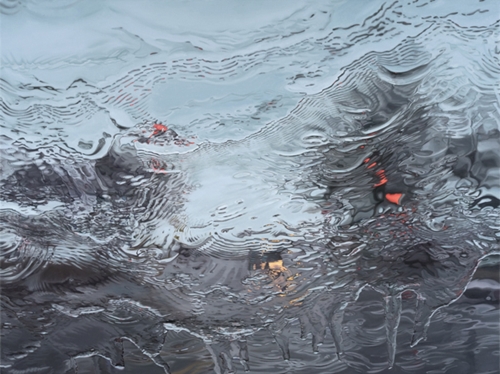
Gregory is another hyperrealist known for his work with water-related subjects. Not only are his painting hyperreal, they are cinematographic as well. This painting, for instance, will transport you to a movie scene where the character waits patiently inside a vehicle. Any minute now, that rain-drenched window will slide down and another character will be introduced to the scene. This is oil on linen and called “Until Now.”

5. Luigi Benedicenti
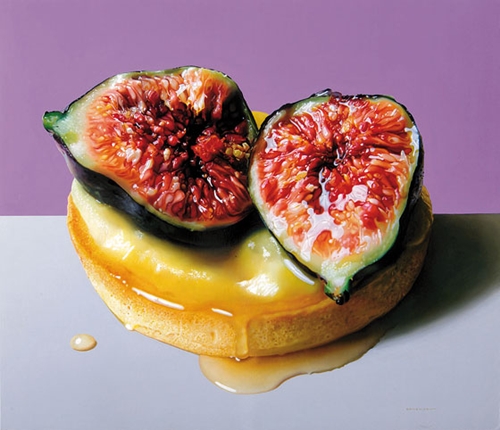
This painting puts to shame the work of the best food photographers out there. In fact, all food paintings of this Italian master look incredibly real and delicious. I’d hazard to say that they look even more mouth-watering than an actual scoop of ice cream or slice of fruit in front of you. One look and your senses are assaulted with all great things that you relate with luxurious treats — from the aroma to the way they melt to the texture to the way they taste in your mouth.

6. Jacques Bodin

This French hyperrealist has shown his beautiful works in Milan and Paris. His close-up paintings of women can rival the most detailed editorials of magazines. But it’s his paintings of grass that really take on a hyperreal element. This painting, for instance, can easily be a photograph of a grassy knoll near the beach.

7. Pedro Campos
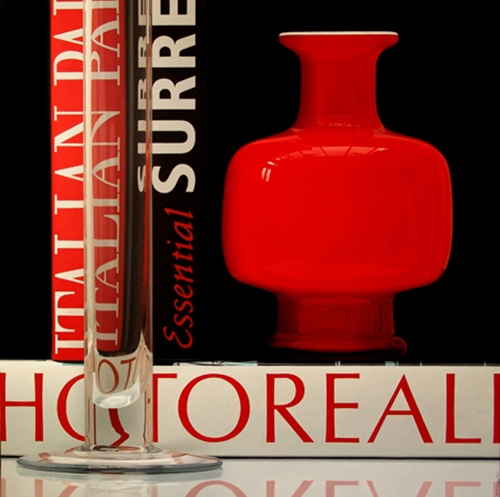
“How could this be anything but a photograph?” you ask yourself. Well, it’s not. It’s an oil on canvas that measures around sixty by sixty inches. This is not the most impressive of this hyperrealist’s works. He also has fantastic paintings of fruits, soda cans, marbles, and other objects that will make you go “Whoa!” The thing that you must notice is the way he paints plastic bags; they look so real you can almost hear them crinkle.

8. Claudio Bravo
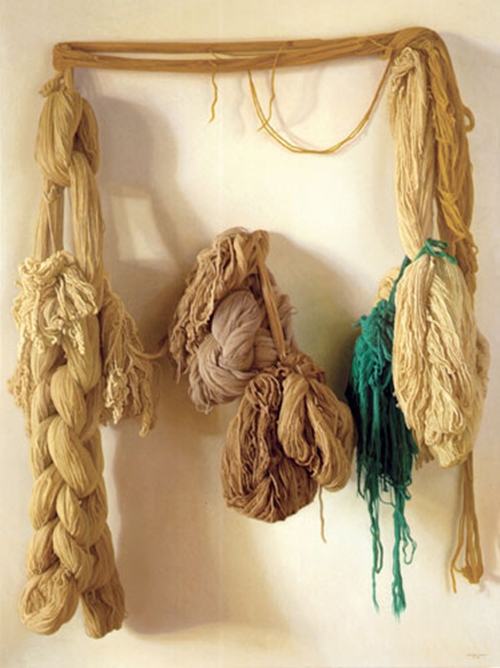
Hailing from Chile, this hyperrealist now lives in Tangier, Moroco. If that brilliant painting is not enough to impress you, Claudio has been commissioned by very powerful people to do their portraits. Examples are the former president and first lady of the Philippines, Ferdinand and Imelda Marco and the dictator of Spain, Franco.

9. Alyssa Monks
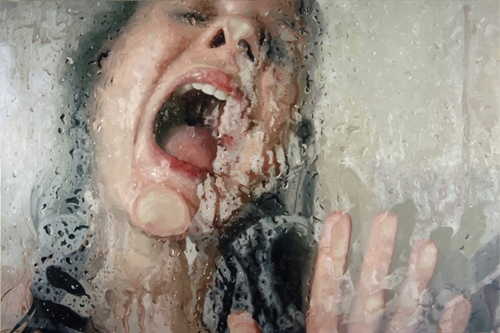
This talented lady’s works can be primarily categorized as photo realism but she has some paintings that can be called nothing but hyperreal. Her series of bathing portraits, for example, include genuinely exceptional hyperrealist pieces. This is not really surprising since Alyssa is one of the celebrated painters of our time. Her works have been displayed in top galleries all over the world. She has also been awarded the Elizabeth Greensheilds Foundation Grant for Painting thrice.

10. Simon Hennessey
yt
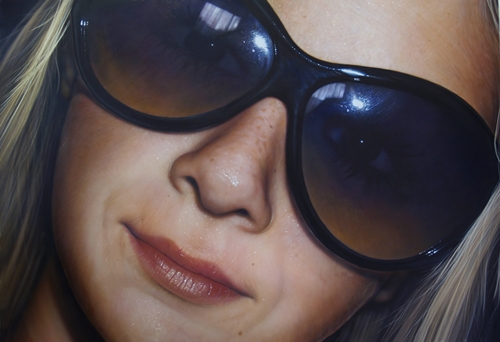
Doing portraits primarily, Simon is one of the most popular hyperrealists today. He has painted celebrities and has has shows all over the UK. If you ever like having your mind blown, you may visit his work at the Plus One gallery in London. And perhaps, if you have money to burn, you can ask him to do a portrait of you.
read more

Vienna the Peaceful

One thing you won't lack for in Vienna is a place to go and drink coffee. You'll often find there is one opposite your hotel, which is very handy when you wake up late, miss breakfast, and need something to wake you up in the morning. Not that we've done this on a very regular basis. Much...

There is something about Vienna's wide variety of coffeehouses that is very comforting. We suspect they used to having to cater to hungover tourists and locals, so the staff generally speak softly and give you what you want with the minimum of fuss—in our case normally something greasy such as fried sausages and a large pot of coffee.


Of course, coffee drinking isn't just for those who have been out the night before. Vienna's coffeehouses are great places to meet friends for a chat and catch up. If you're feeling peckish, you can enjoy a range of sweet treats along with your coffee.

Whether you go to Café Sacher, one of the most luxurious cafés in Vienna, or one of the many small coffeehouses surrounding it, you can find the perfect atmosphere for you. You see, the Viennese coffeehouse is more than simply a place to enjoy coffee; it's an institution. Writers such as Karl Kraus and Elias Canetti, artists such as Gustav Klimt, and other creative geniuses all sat down in various coffeehouses to relax and discuss ideas. Whether you go to the Café Hawelka or the Café Museum, you are sitting in a piece of history.

If you fancy something a bit different, however, you might want to try Haas & Haas, which offers a variety of breakfasts from around the world. You can sit down and order a full English breakfast while your partner has dim sum, the Chinese breakfast, served in a bamboo steamer. Café Sperl is famous for its soft boiled eggs and ham, and Café Drechsler, our personal favorite, offers great sausages and goulash—a perfect hangover cure.

When you have a coffeehouse just over the road from your hotel, though, you will find that it's the perfect place to have a midmorning snack and just generally relax. That's what makes Vienna's coffeehouse culture absolutely fantastic—they are relaxing, charming, and elegant. And the coffee is great, too!


If you are a massive music fan, there are a lot of options for you in Vienna. Whether you like classical music, jazz, rock, metal, or pop, you are sure to find a venue that will cater to you, and they’re all within easy reach from your hotel or zimmer.


Classical music, of course, has a major influence in Vienna. The Vienna State Opera offers performances 300 days of the year on a wide variety of themes, albeit based on opera or ballets. In addition, the Vienna Musikverein and the Vienna Konzerthaus both offer a wide range of classical music, including concerts, musicals, and recitals. 

If you prefer something a little more modern, there are a wide variety of clubs and other venues within the city. One of the biggest venues is the U4 club, which has seen the likes of Prince, Nirvana, and Grace Jones. If you're feeling brave, you can check out the Jenseits Café & Dance. This former brothel generally focuses on funk and soul with a little bit of jazz thrown in. If you're in the mood for a wide variety of music, the Prater Dome offer something for everyone. Vienna's largest disco offers a wide range of music, from dance, trance, and garage to R&B, salsa, and Latino – all in the same venue.

No city would be complete without its jazz clubs. One of the best clubs to visit is Jazzland, which is Vienna's oldest jazz club. Hidden underneath a church, this club has managed to attract numerous famous jazz musicians, from Big Joe Williams to Ray Brown. The food is pretty decent too. Another place to visit would be Porgy and Bess. This unique club has musicians from around the world visiting it, including some more unusual ensembles. A recent concert featured jazz musicians from Tajikistan, Uzbekistan, and Turkmenistan. If you just fancy a very nice dinner with some jazz in the background, go to the Albertina Passage, which is based in the Vienna State Opera. 

If you fancy doing a bit of dancing, you can practice your samba or salsa in Vienna's Latino clubs. Floridita is a great place to experience the delights of Cuba, and El Dorado's cozy atmosphere is a perfect place to learn a little bit about Latin America's dances.

Finding these clubs is generally easy, but be sure to check out what is open by asking around. Some of the smaller clubs are well worth a visit, so ask your friendly Austrian hotel staff for details.


read more

Street Arts


Before coming to Europe, I had no idea about street arts. I only saw few of such things in magazines or in movies. After coming here, i got amazed by the art quality and the creativity behind such great form of arts

Specially i loved the ones in trains in Portugal, in the train tunnels of France. Though i don,t know it the graffiti and the street arts are different or the same. The main think is i loved the format. This is a way, where art can become a weapon against all that is evil in our society today. I call this artists the baul of modern times. I heard about streets arts in Latin america is one of the best. I would love to go there in my life to see those by myself. 


I appreciate these artists a lot for the work they had been doing for years

Here i am sharing with you my top ten favorite street arts. 


read more

Kustia where Lalon and Tagore lived

Kustia is a city in Bangladesh where lived two legends who shaped the bangla culture to what it is todays. There must me something in the land, in the air in that city. I once been there and felt the difference. The city is amazingly poetic, brings out the spirituality among a person. 


Each year there is a Lalon festival in this city, where all the baul singer gathers and exchanges their philosophies.  They perform to the fullest. I have some audio collection of those, which i will upload in my youtube channel soon and post the link in the blog. Here i am sharing some photos with you to give a feel of the things on the night of the festival.


Also in kustia, there is the kuthi bari of Rabindronath Tagore, it is made of wood, there is a nice lake by the house. Amazingly clam and musical environment. Very hard to explain. We should all oneday visit that place to now how our poet felt living some years in that place.


read more

Christmas markets – hot wine, pastries & gifts


The time of Christmas markets is quickly approaching, travel agencies have already offered two – three days long arrangements to most popular destinations around Europe that attract thousands of people every year. Maybe you are thinking of visiting one of those places as we speak.
The idea of Christmas fairs is generally the same, though there are some differences between regions and countries. East Europe is well-known as a destination that every traveler puts on his travel map at this time of year. Visiting some of the best fairs in Germany like Nurberg, Berlin, Frankfurt, Etfurt or Dresden you cannot miss, as well as Vienna’s market in Austria, Budapest’s in Hungary or Prague’s in Czech Republic. All the markets open on the last week of November and last till Christmas Eve, marking the weeks of Advent. They work from morning to late evening, around 8 or 9 pm and are usually held on main squares.
Christkindlmarkt, Vienna
Particularly attractive during late afternoons and evenings, when it’s dark and all the lights and people create the seemingly warm atmosphere, Christmas markets turn into shopping bazaars. The original concept was to present and sell hand-crafted work typical for that region and for the period (Christmas time). But nowdays, you’ll find things such as hand-crafted work, Christmas ornaments to gloves and scarves, candels, jewlery, sweets and more. So don’t believe everything you hear! 
booth, Vienna's market
booth, Vienna
The second reason why people visit Christmas markets is because of the food. There is always something typical for the region you are in but where ever you go, you will find the inescapable grilled suasages, deep-fried potato cakes and hot mulled wine. Just to keep the winter cold away… And where there is food, there is music too. Coming out of the numerous wooden booths or sometimes as live performances in the later hours of the day. Kids won’t be neglected either. With so many sweets to choose from and shows to watch, you will not have to worry about the little ones.
Koblenz
Erfurt
nurberg-21
Nurberg
My disclaimer is that you really don’t have much to do there for three day. Have fun, enjoy the atmosphere and then take a walk around the city, go shopping or sit in one of the local cafes or restaurants. In the end, all you want to do is to experience the Christmas spirit…
read more

Riding the Trans-Siberian Railway


Between Moscow and Lake Baikal lie over 3,000 miles of track. The Trans-Siberian railroad winds through lowland plains and mountain ranges, chugging away from Russia’s urban centers and slowly out into the unknown. Or at least, that’s how it feels to a traveler, as the suburban brick and concrete fades into a pastiche of birch and meadow.
The SIberian Plain
This is Russia’s economic heartland and its first frontier. Conquered by the Mongols, settled by Cossacks, and now home to most of Russia’s industry and farmland, the western part of Siberia has plenty to explore. A few cities account for most of the population; stopping in these urban centers, you’ll get a sense of how Siberian Russia differs from Moscow and St. Petersburg.
Kazan is a Trans-Siberian traveler’s first glimpse of what is to come. Although a bit south of the main rail route, the city’s unique heritage merits a detour. Mosque minarets puncture the skyline. Many of the inhabitants claim to be descendents of the Tatars, who ruled 700 years ago, and indeed, Kazan is the capital city of the independent Republic of Tatarstan. Siberia is studded with such independent republics, areas where minority culture has resisted (or re-emerged from) Russification.
Historical centre in Kazan
Due to its ancestry, the city has some beautiful architecture. The Kremlin, a UNESCO Heritage Site, was originally a Tatar fortress. Overlooking the Volga River, the Kremlin is a striking sight: above the fortress walls rise the plump Russian Orthodox onion-domes, squat gumdrops atop white towers; next to it, the Kul Sharif mosque lifts four white minarets, tipped in blue. The coexistence of these two centers of worship, the focal point of Kazan, reflects the diversity of its population – and initiates a traveler’s shift away from fully European Russia.
A day or so later on the train, the landscape outside the train window begins to change. The Ural Mountains begin to rise in fir-tipped karst formations. You almost don’t notice it – there’s an obelisk, off to the side of the tracks in a shady stand of trees. The train whips past, and you’re in Asia.
Spas-na-krovi Cathedral (Church of All Saints) in Ekaterinburg
From the train, Yekaterinburg looks like a sprawl of concrete.  Soviet industry found a hub here, and the city remains rather grey. However, it has one key point of interest: revolutionaries killed Russia’s last Tsar and his family in Yekaterinburg. Although the house where they had awaited execution no longer stands, the Church of All Saints commemorates the murders and the canonization of the family. The modern Russian people seem to feel a tragic sympathy with the dead Romanovs, and the church is a solemn, touching reminder of the brutality that inaugurated the Soviet Union.
From Yekaterinburg, the train dips south toward Kazakhstan. Adventurous travelers can disembark at Yekaterinburg for a trek into the Altai Mountains, a remote alpine wilderness. Historically the home of nomadic peoples, whose culture is closer to Mongolian and Central Asian than Russian peoples, the Altai are renowned for adventure travel. The Ob River originates in the peaks of the Altai, and white-water rafting is a popular activity. The area also provides a glimpse into some of the region’s traditional, non-Russified cultures, which have survived relatively autonomously in the remote landscape.
Venturing deeper into Siberia, the train crosses the Ob River. The next major stop is Novosibirsk, a metropolis by Siberian standards. Novosibirsk is Siberia’s largest city and therefore contributes a large share of the region’s culture.  An active ballet company, opera house, and student population gives the city a vibrant feel. Founded in the 1950s, the Academy Town was once the scientific research hub of the Soviet Union; now it houses Novosibirsk University, as well as several private research and technology companies. Tucked among pine trees, the university makes a nice place to stroll.
Top of Krasnoyarsk Pillars in Siberia
A day or so later down the tracks, the train crosses the Yenisei River at Krasnoyarsk. Hemmed by mountains, this pleasant city’s main attraction is its proximity to Stolby Nature Reserve. For climbers and hikers, the natural area tantalizes: bulbous granite pushes up out of the forest, forming fantastical pillars. Hardcore rock climbers often go vertical; for the average tourist, a bit of scrambling and hiking in the reserve makes an enjoyable day-trip from Krasnoyarsk.
At this point, the Trans-Siberian has traveled around 4000 kilometers. Even if you’ve disembarked a few times, you’ll likely be ready for a break from train travel. After Krasnoyarsk, the next major destination along the Trans-Siberian is Irkutsk and the shores of Lake Baikal. Leaving behind the agricultural and industrial heartland, the train is entering a world of shamanic legend and nomadic peoples – a very different Russia than the one you left behind in Moscow.


read more

Horny City Barcelona !!

Summer Nights with El Chiringuito!!

One of the best things about living in Barcelona is the al fresco lifestyle. There's nothing quite like having an early evening drink outside on a terrace somewhere with the heat of the day still around but the cool breeze of the evening starting to cool things down. Barcelona locals really don't know how lucky they are in that respect and I warmly welcomed the recent news from City Hall that there would be more licences for more terraces this summer.

However, sometimes you have to go with the best. Yes, it's great in a city terrace but what better place than the beach?! The Mediterranean in the background, some cool tunes coming from the DJ and drinks aplenty for the punters. There can be only one place - El Chirninguito. There are two chiringuitos  - just think "beach bar" - down in the Olympic Village at Playa Bogatell and also Nova Mar Bella. Not only are these places the coolest beach bars in the city (think hammacks, terrace, fruit juices, cocktails, etc.) but you can get a damn fine bite there, too. And not to mention Yoga, fitness schemes and just a pretty damn cool place to arrange a meet up with your friends.

Anyone who goes to any bar in the city will know the popularity of Gin & tonics this year, and the Chiringuito bars are no exception, with a great selection of Gins on offer as well as the usual brews and beers. A great way to relax in the summer heat, get yourselves down there!

3rd Parallel Party This Saturday!

Parallel is considered to be the Theatrical artery of the city, and aims to cement itself as the broadway of the city - City Hall's plans to make it a gateway between the ever-bustling Port and cruise terminal and Plaça Espanya with the Fira and Las Arenas. With there-opening of EL Molino and Ferran Adria's Ticket bar hoping to fuel the fires of traffic to the avenue, it's another turn for this year's Fem Paral·lel Festival this Saturday from 10am till 2am. Likeprevious years, the street is taken over with various stands and stages, workshops and tables with activities and displays for all ages.

Theatres including the Apolo, El Molino and Victoria also open their doors for the locals to have a nosey around and the party goes well on into the night with concerts and live music from all over the world. Full details and programme can be downloaded here (pdf). One of the best things avbout the day (in my opinion) is the fusion of two neighbourhoods with such cultural and ethnic diversity such as Poble Sec and Raval. I've been to the last two and they were great fun, so if you're in and around the area on Satuday, I can reccomend you popping down to check it out!


Red-Carpeting the Raval

If you happen to be strolling around the Raval today or tomorrow, I highly recommend heading on down to the area of Carrer Vistalegre, Carrer de l'Aurora and Carrer Carretes. That's because today and tomorrow sees the latest edition of thePaso de Zebra  festival of fashion and artistic expression and it's also a chance to see the streets of the Raval with a red carpet!! OK, well, pink, purple and green, but it's still bloody cool. I apologise to the organisers as I'm not sue which edition it is (3rd?) - feel free to comment anyone who knows more than me!

The idea supports local designers and jewelery craftspeople in a similar way that the weekend market of the Rambla del Raval does: all artisan products and designs, with no brands or well-known makes on offer. I took these photos early this morning, so it was still a little incomplete and empty but the festival is going on all day and into the night, with live music and a really cool chill out Moritz lounge/bar in the basketball courts on Carrer Aurora.

It's a great way to meet the neighbours in a different setting and support the local designers in such tough times. There were some really cool bags this morning made from old vinyl records, for example that caught my eye, and although I had to go, I can definitely reccommend heading down - if not for just a chilled drink in the Moritz lounge!
read more

An Inspiring Voyage to Lisbon


Changing Course is a wonderful project which has captured my attention recently. Greg Frucci, known as “Frooch” to his friends is soon to set sail on a single-handed voyage across the Atlantic Ocean from his home in Wilmington North Carolina to Lisbon, Portugal.
Portugal of course is known for The Discoveries: the monument at Belém stands testament to that. Bound within the history of the voyages is the economic, cultural, psychological and spiritual impact. These daring journeys of exploration opened up a new world view as well as new trading routes and experiences.
After visiting Lisbon on business, Frucci fell in love with the culture, architecture and the language. As ever, Lisboa worked her mystical magic and wove herself deep into Greg’s heart and soul.
The journey is both physical and spiritual. For Greg it is a chance to reflect upon his life. He says “The voyage is more about a series of life events over 50 years which synchronously leads to this event.”
The entire trip will be filmed by standalone high definition cameras onboard. From this footage will be produced ‘Changing Course’ “an inspiring film about a 50 year old man’s quest for peace within himself and the world he lives in.”
Greg’s challenge is to sail 3280 nautical miles. The voyage will be split into three legs from Wilmington to Bermuda then Bermuda to the Azores. He will rest for around a week in the Azores (although ‘rest’ includes possibly climbing a volcano!). From the Azores he will then make for his final destination landing in Cascais. The entire journey is likely to take around 30 – 40 days – no mean feat considering during this time he will sleep only in strict one hour intervals as checking he remains on course is paramount. Home for the duration will be a 30 foot sailboat named “Cuddy”.
His blog not only explores his preparations for the journey ahead but also includes philosophical points to ponder. In one post where he talks about truth and falsness he says: -
“While in Lisbon, Portugal, a feeling of calm surrounded my soul supported by what is real.”
And this is what I experienced in Lisbon: a sense of calm, a feeling that everything seemed more ‘real’ than it had ever done before. I ache to go back, to stowaway on Greg’s ship and let the waves carry me home.
Frucci aims to set sail on May 17th (weather permitting) and plans to stream live on a daily basis so that we can join in on his journey. He should land in Portugal sometimes around late June/early July.
For more information please visit http://coolchangeproductions.com/ and check out the beautiful promo below.
Boa Viagem Greg!

read more

Classic NICE


Le Passagin is a fond childhood memory of all the vieux Nicois:  the little row-boat shuttle service that, up until the ’60′s, used to ferry people from one side of the Nice Port to the other.  But just like the old Nice tramway that was torn out only to be rebuilt 50 years later, Le Passagin is back!    
Inaugurated last weekend, the little (now motorized) 6-passenger boats are at your disposition to cross the Port all day, every day from 10am-7pm, …and at least for this summer, it’s free.

Photo by Richard Ray, courtesy Nice-Matin
Now the 15-minute walk around the Nice Port, which can be brutal under the full sun, can be done in just 2 breezy minutes… not to mention the fabulous view, the charmingly authentic barque, and your captain: a local fisherman moonlighting on the side.
Venice might have its gondolas, but Nice has its little Passagin…!   A wonderful initiative by the Ville de Nice that proves the saying, ’Everything old is new again!’
Photo credits: Le Passagin 1940-1950 by Phrasea et repro by Pascal Amoyel,  Le Passagin 2012 by Richard Ray, both courtesy of the Nice-Matin

In rapid fire, the Mayor’s office has launched several controversial initiatives to cut the noise in Nice.

Photo Best of Nice Blog
First, last year’s rules on street musicians are starting to be enforced:  No more speakers (yea!), musicians must be pre-approved for quality, can only play during specified hours, and only in designated places like Place Massena, Cours Saleya, etc.   Whereas the new rules will spare us all a lot of grief from the many horrible buskers, the rules will also put a major crimp on the many talented musicians.  The first casualty:  the fantastic Piano Man, Steve Villa-Massone left Nice last year in protest when the rule was first made.
Next is the new Open-air Alcohol Ban that prohibits drinking in the streets, beaches and parks from 8pm-5am.  This could cut down on late-night drunken singing and fights, which would be a good thing.  But what about beach picnics?  Are we expected to forgo the wine?!  Evidently the rule will be selectively enforced, so if you are not breaking bottles or playing the tom-toms late into the night, the patrols should let you be.
The most controversy has come over the Noisy Wedding Ban.  Eastern European and North African wedding traditions include driving through town with flags flying and honking madly as if their country just won the World Cup… and with 30 weddings a day on the weekends, this gets really tiresome.   The new ban went into effect last weekend, and prohibits raucous weddings, excessive honking, and disrupting traffic… all of which actually seemed on the rise last weekend!  Opponents mounted a clever protest: a silent wedding, and are busy trying to find photos of Mayor Estrosi’s own wedding to see if it indulged in any of the forbidden acts!
All of these new rules have many people up in arms: is a less noisy Nice worth becoming a Nanny State?  Will licensing street musicians kill the spontaneity that buskers embody?   Are these new rules crossing the line of personal freedom?   What do you think?
Photo credit:  Silent wedding courtesy of Philippe Biancheri; Busker by Best of Nice Blog

read more

Art Night Venezia


Judging from the crowds at the few venues we managed to visit, the second edition of Art Night Venezia (or
 l'arte libera la notte) was a huge success.  From 6 pm until midnight last night, museums, private and public institutions, bookstores, and theaters all over the city hosted performances and exhibitions--all free to the public.


The impossible list of venues we wanted to visit totaled 13--just a fraction of what was on offer--and ranged from an exhibition at La Scuola Grande San Giovanni Evangelista in San Polo to another at Fondazione Querini Stampalia in Castello.

Having gotten a very late start, and in the company of a 4 1/2-year-old, we managed a total of just three.

 First among them was a visit to The Palazzo Cini Gallery at San Vio. Jen and I had tried to visit a couple of months ago, only to learn how very out-of-date our trusty Venetian guidebook was: it was closed--and not just for the part of the year designated in our guidebook, but year-round. So last night was our only chance.

How I'd like to post a photo here of Botticelli'sJudgement of Paris, of Pontormo's Double Portrait of Two Friends, or of a particularly beautiful 14th-century Sienese painting of Christ the Redeemer, all gold and pale rose, but photo-taking was not allowed, the guard told me, except with a cell phone. The image at right, of Sassetta's Madonna dell'umilità, is from artwallpaper.org, but is worth a visit to the Palazzo Cini all by itself--if you ever find it open again.

For the guard confirmed that the Palazzo's gallery is now closed year-round, except for special events. He vaguely alluded to the possibility of it re-opening for part of the year again some time in the future--but more in a tone of amiability than conviction. 

Two Guggenheim favorites: Marini & Brancusi
Our next stop was to an institution you'll have no trouble finding open: the Guggenheim Museum. It was, as always, marvelous--and packed with people. Sandro's favorite things there were a very large contemporary outdoor mechanical piece--like a faceless and hence purposeless clock--and a 4 euro can of Fanta from the museum cafe served in a tall glass of ice with a straw nearly as long as his arm by a very nice pair of baristi.

Like many others, he also could not help but remark upon the pipoto (Venetian term for penis) of Marino Marini's enthusiastic Angel of the City, at right.

By the time we finally finished with the Guggenheim, the concerts at our next destination--Ca' Artom, right next door on the Grand Canal--had concluded, so I can't tell you a thing about the inside of that palazzo, now used by Wake Forest University for their study-abroad program.

All indications at our final venue were that the open studios at the Accademia di Belle Arti in the Ex-Ospedale degli Incurabili on Zattere would be happening well beyond the scheduled midnight closing time. But it was already too late for Sandro, asleep in his stroller despite an early evening nap, and we could only devote a little time to works that merited much more.

It was perhaps the perfect venue to end at, however, this hive of energy and creativity and, yes, even hope, along one edge of this city that some people are all-too-ready to write off as merely a museum. Art is still being made in this city, as you can see below, and it was reassuring to see this at the end of the evening, to find that this essential urge does seem to be incurable.

read more
Blogger Template by Clairvo